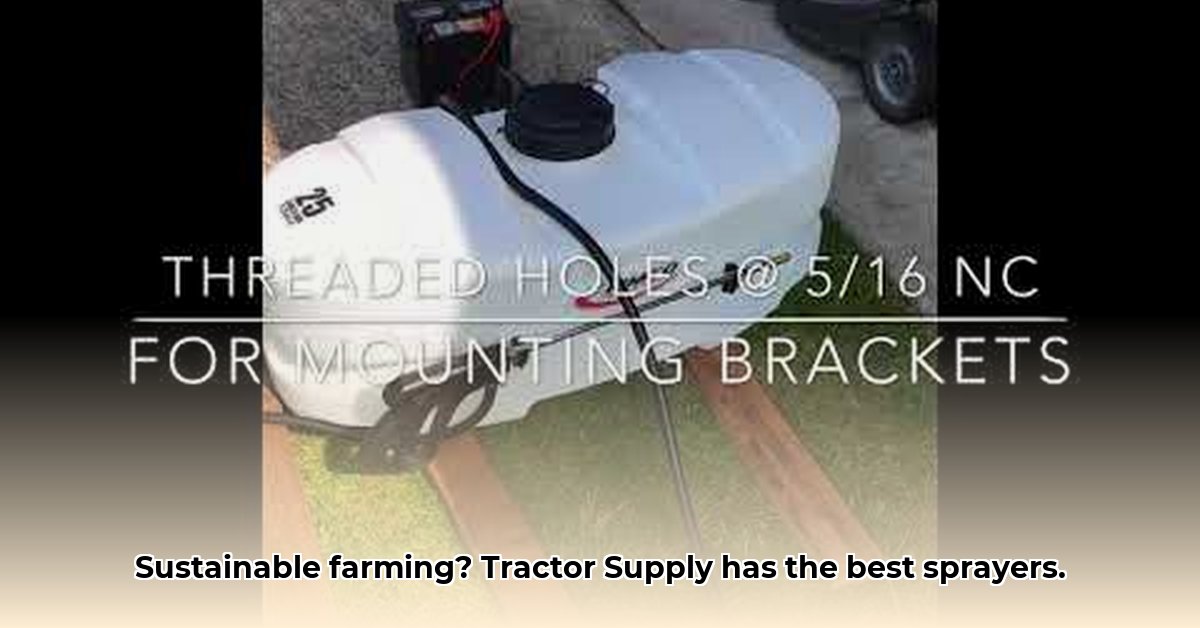
Choosing the right sprayer tank is crucial for efficient and sustainable farming practices. Whether you're a large-scale commercial farmer or a home gardener, selecting the appropriate tank from Tractor Supply can significantly impact your yields and environmental footprint. This guide will help you navigate the options and choose the best sprayer tank for your specific needs. For more information on tractor attachments, check out Tractor Supply's website.
Understanding Sprayer Tank Types
Sprayer tanks vary significantly in capacity, material, and features. Understanding these differences is key to making an informed decision.
Capacity: Matching Tank Size to Your Needs
Sprayer tank capacity ranges widely, from small models suitable for home gardens to large tanks for extensive agricultural operations. Consider your application volume and refill frequency. Smaller tanks are lighter and easier to maneuver, while larger tanks require fewer refills but may be more cumbersome. What size operation do you have, and how much liquid will you typically need to spray in a single session?
Material: The Importance of Polyethylene
Most sprayer tanks are made from polyethylene (PE), a durable, chemical-resistant plastic. High-density polyethylene (HDPE) is preferred for its superior strength and resistance to agricultural chemicals. Low-density polyethylene (LDPE) is less robust and may not be suitable for all chemicals. Look for tanks with certifications indicating their quality and chemical resistance (HDPE is generally preferred for its superior durability). Does your chemical usage necessitate the superior strength and chemical resistance of HDPE, or would LDPE suffice?
Features: Enhancing Efficiency and Precision
Several features significantly impact sprayer performance:
- Pump Type: Diaphragm pumps are common for their simplicity and reliability. Piston pumps offer higher pressures suitable for specialized applications. What level of pressure and consistency is necessary for your specific needs?
- Pressure Settings: Adjustable pressure allows for precise application, minimizing waste and drift. Higher pressures create finer sprays, ideal for targeted application, but too much pressure can lead to chemical drift. What pressure range best suits your needs and the types of crops you are treating?
- Nozzle Configurations: Different nozzles create varied spray patterns affecting coverage and particle size. Choosing the right nozzle ensures optimal chemical distribution and reduces waste. What type of spray pattern (e.g., cone, flat fan) is most suitable for your application considering your terrain and crop type?
Choosing the Right Sprayer Tank for Your Needs: A Step-by-Step Guide
Selecting the right sprayer tank involves a methodical approach:
Step 1: Assess Your Specific Needs:
- Operational Scale: Determine the size of your operation (small garden, large farm). This directly affects the required tank capacity.
- Chemical Use: Identify the chemicals you’ll use and their compatibility with different polyethylene types. Consult the material safety data sheets (MSDS) for each chemical.
- Budget: Establish a budget and compare prices across different models and brands. Remember that a higher initial investment in a durable tank often translates to long-term savings.
- Terrain: Consider the terrain (flat, hilly) and its impact on sprayer maneuverability and weight.
Step 2: Compare and Contrast Options: Use Tractor Supply's website or in-store resources to compare models, focusing on capacity, material, pump type, pressure settings, and nozzle options.
Step 3: Leverage Customer Reviews: Read online reviews to get insights into the reliability and durability of various sprayer tanks from other users.
Step 4: Make Your Purchase: Once you’ve chosen a tank, purchase it from Tractor Supply, and carefully review their return policy.
Sustainable Practices with Sprayer Tanks
Sustainable farming practices extend beyond tank selection. Proper usage significantly impacts environmental impact:
- Precision Application: Calibrate your sprayer regularly to ensure accurate chemical distribution and minimize waste. Research suggests that precise calibration can reduce chemical use by up to 20%.
- Chemical Management: Store chemicals responsibly, following safety guidelines and label instructions. This includes proper mixing, labeling, and preventing spills.
- Tank Maintenance and Disposal: Thoroughly clean and rinse your tank after each use to prevent contamination and corrosion. Dispose of leftover chemicals and cleaning solutions according to local regulations.
Conclusion
Investing in the right sprayer tank is a crucial step towards efficient and sustainable farming. By considering your specific needs and following the steps outlined above, you can choose a high-quality, durable polyethylene tank from Tractor Supply that optimizes your application practices and minimizes your environmental impact. Remember that responsible chemical handling and regular maintenance are vital for ensuring both the longevity of your equipment and the health of the environment.